
OpenJS Electron 42.2.0 For Windows Download
OpenJS Electron 42.2.0 for Windows is a powerful open-source framework that allows developers to create cross-platform desktop applications using modern web technologies. Based on Chromium and Node.js, Electron combines the rendering power of a web browser with all the features of a desktop environment.
Electron is used in many popular desktop applications, including:
- Visual Studio Code
- Notion
- Figma Desktop
- GitHub Desktop
- Obsidian
Whether for professional developers, startups, enterprise software engineers, or open-source contributors, Electron 42.2.0 offers an extremely flexible platform for building modern desktop applications on Windows systems.
Key Features of OpenJS Electron 42.2.0 For Windows:
Cross-Platform Desktop Application Development
One of Electron’s main strengths is its cross-platform architecture.
Developers can build applications for:
- Windows
- macOS
- Linux
Using a single codebase significantly reduces:
- Development time
- Maintenance complexity
- Deployment costs
Chromium-Based Rendering Engine
Electron uses Chromium as its rendering engine.
This engine offers:
- Modern web rendering
- HTML5 support
- CSS3 support
- JavaScript execution
- Browser-level user interface features
Node.js Integration
Electron integrates directly with Node.js, allowing applications to access:
- File system operations
- Network communication
- Operating system APIs
- Process management
- Backend logic
Native Desktop Features
Electron applications are deeply integrated with Windows features.
Supported features:
- System notifications
- System tray icons
- Native menus
- File dialogs
- Keyboard shortcuts
- Clipboard access
- Hardware acceleration
Rapid development workflow
Electron allows developers to quickly create desktop applications using web technologies.
Its advantages include:
- Rapid prototyping
- Reusability of front-end skills
- Shared web application logic
- Simplified deployment
Extensive ecosystem and community
Electron benefits from a large developer ecosystem.
The framework offers the following advantages:
- Open-source tools
- Comprehensive documentation
- Active community support
- Third-party libraries
Plugin ecosystems
Many popular JavaScript frameworks integrate seamlessly with Electron, including:
- React
- Vue
- Angular
- Svelte
Automatic updates
Electron supports automatic application update systems.
Developers can implement:
- Background updates
- Patch distribution
- Version management
- Release channels
This improves long-term software maintainability and the user experience.
Access to native APIs
Electron provides access to operating system APIs via JavaScript.
Developers can use:
- File systems
- Hardware resources
- Operating system-level integrations
- System configuration
- Native dialog boxes
What’s New in Electron 42.2.0?
Chromium Engine Update
Electron 42.2.0 includes an update to the Chromium engine.
Benefits:
- Improved rendering performance
- Greater web compatibility
- Optimized JavaScript execution
- Support for modern browser features
These improvements allow Electron applications to run more efficiently and securely.
Updated Node.js Integration
Recent versions include improved Node.js support, with:
- Improved execution performance
- Greater package compatibility
- Enhanced backend functionality
This allows developers to more effectively leverage modern JavaScript ecosystems.
Security Enhancements
Version 42.2.0 introduces several security enhancements, including:
- Improved sandbox
- More secure IPC management
- Improved context isolation
- Updated dependency protection
Security remains a top priority for modern Electron development.
Performance Optimizations
Recent updates improve:
- Boot time
- Memory management
- Rendering efficiency
- Multiprocessing
These optimizations help reduce resource consumption in large Electron applications.
Improved Windows 11 Compatibility
Electron 42.2.0 improves compatibility with:
- The Windows 11 user interface
- High-resolution displays
- Modern window rendering
- Hardware acceleration
Applications run more smoothly and responsively on modern Windows systems.
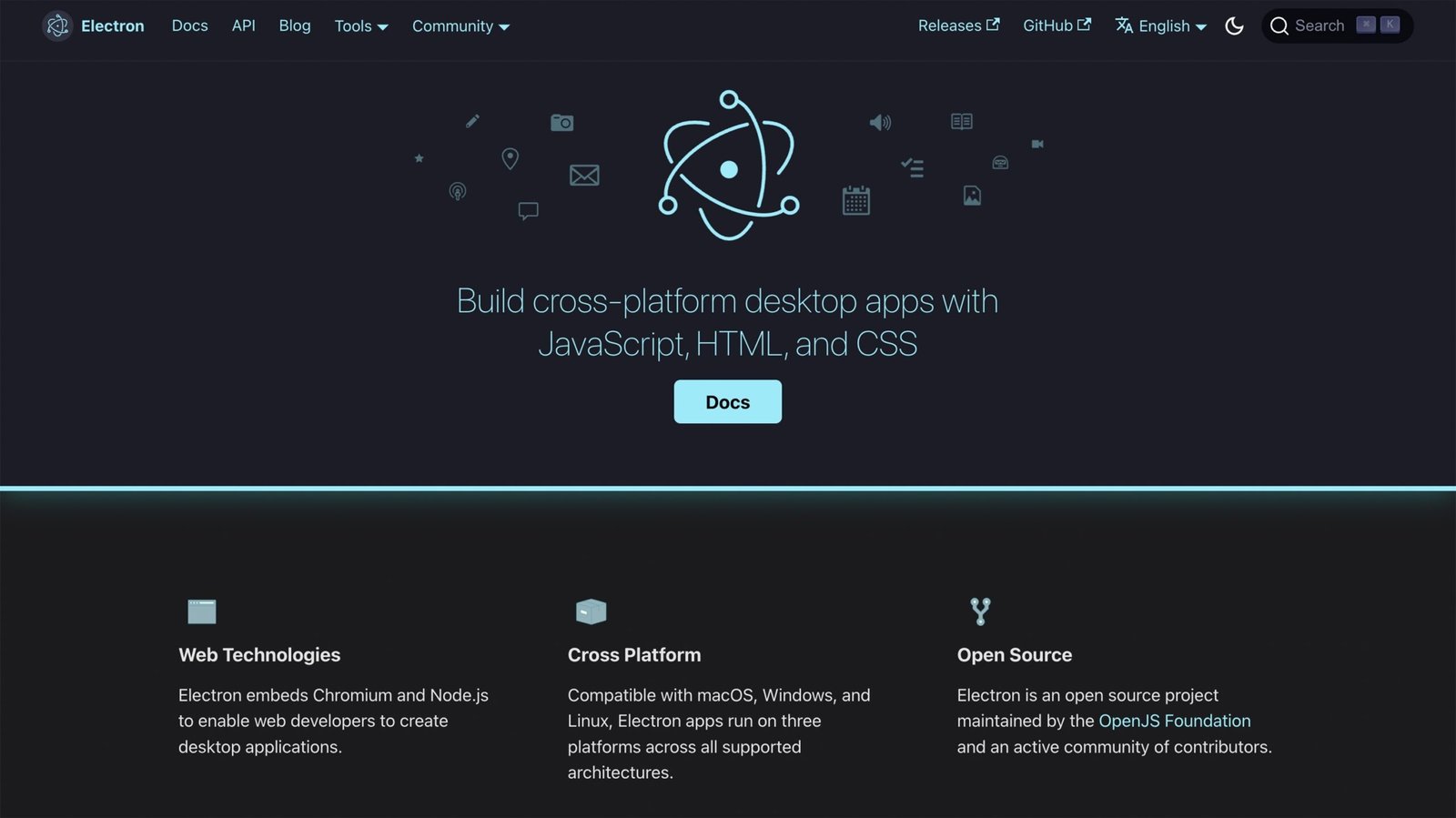
Screenshots:
System Requirements:
Minimum System Requirements
To efficiently run Electron 42.2.0 development environments on Windows, users must meet the following minimum system requirements:
- Operating System: Windows 10 (64-bit), Windows 11
- Processor: Dual-core Intel or AMD processor
- RAM: 4 GB minimum
- Storage: Approximately 500 MB of available disk space
- Additional Requirements: Node.js installation is recommended.
Recommended Configuration
For smoother development and testing of desktop applications, the following configuration is recommended:
- Operating System: Windows 11
- Processor: Intel Core i5/i7 or AMD Ryzen processor
- RAM: 8 GB or more
- Storage: SSD recommended
- Graphics Card: GPU acceleration is recommended for complex interfaces.
Meeting the recommended configuration improves build speed and performance. Execution response.
Advantages and disadvantages of OpenJS Electron 42.2.0:
Advantages
- Cross-platform development
- Common web technologies
- Uses HTML, CSS, and JavaScript.
- Extensive ecosystem
- Native desktop integration
- Rapid development workflow
- Excellent development tools
- Modern and flexible user interface
Disadvantages
- High memory consumption
- Larger application size
- Integration with Chromium increases file size.
- Higher performance
- Security requires careful configuration.
Conclusion:
OpenJS Electron 42.2.0 for Windows is a powerful and widely adopted framework for building cross-platform desktop applications using modern web technologies. With its Chromium rendering, Node.js integration, native desktop features, extensive ecosystem, security enhancements, and agile development methodologies, Electron remains a benchmark in modern desktop application development.





Leave a Reply